
Sudbury in Depth: Role of Staff
Welcome to the Sudbury in Depth series, where we take a deep dive into the philosophy and practice of the Sudbury model. Each episode, 3-4 staff members from different schools will share their perspectives and experiences on a topic. This time, we'll be discussing the role of staff in a Sudbury school.

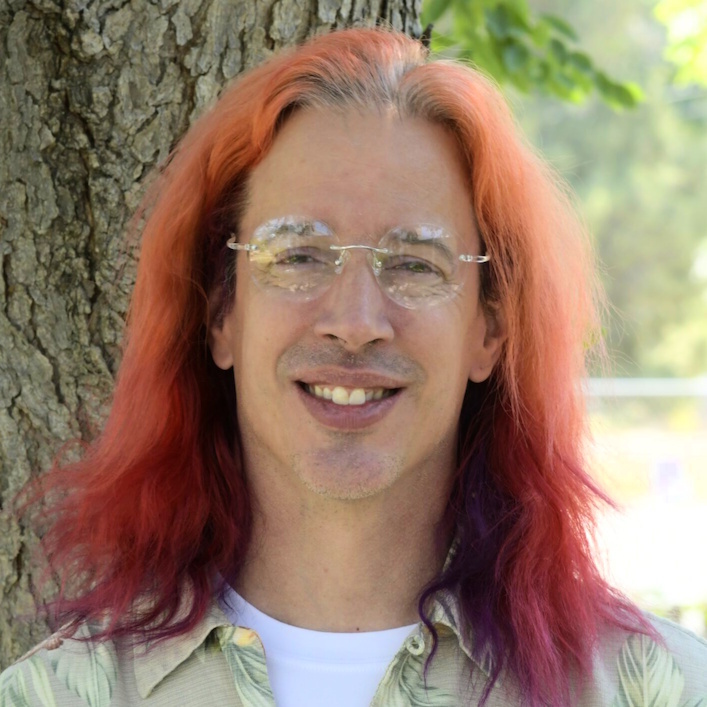
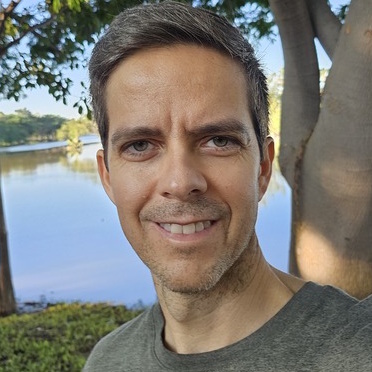
Daniel: The role of the staff, first of all, is to find their own place, to really feel empowered and comfortable with who they are. And once they find that, then they can build these amazing relationships with some of the students. And I say with some of the students, because it is very interesting to see how naturally some kids, for example, will constantly come to me and they want to interact with me. And sometimes it's because something that I like or something that I do, but a lot of times it's just like they're drawn to me and I cannot explain why. But then other kids would not come very often to me, but I would see that they are connected with other staff members that are so different from me.
Because our school is open, so parents can come and go and they don't have to knock or anything, they just go in, a lot of times they will say, oh, but I'm seeing that this staff member is not interacting enough with the students, or I don't see that she's talking a lot, she seems to be very quiet. What they are missing is that she's so kind and tolerant, and many kids will just join her because of exactly how she is. And they will enjoy just walking with her and they will start talking about things because they feel comfortable with her. So if we try to behave like all the staff would be doing the same things in the same way, then you would be losing that opportunity of profound connection thanks to the uniqueness of each person.
Cassi: If we're a village, there's people of different ages and different types of relationships and people keep an eye on each other. The role of staff is the elders in the village. We have been around longer than the kids. We have our life experience.
When we first started the school, we didn't really plan any holiday parties. The staff didn't make a lot of effort on creating holiday parties because that's one of those things that, well, if it doesn't happen, it's not that terrible of a thing. The school can still operate. Whereas if we need a website, we need a website, and we can't just hand it over to a student and say, "Well, it didn't happen." We have to make sure the website is up and it's professional and everything. So every year for a long time, we would have a party committee and then we would have a Halloween party and then the party committee would lose steam, because the Halloween party was, well, that was a lot harder than we thought. Oh, we had to do cleanup. We didn't know we had to clean up after ourselves. All of the work that goes into putting together a party.
I think part of what the adult can do in a Sudbury school is help set a rhythm and set a culture that then can be handed over to students. And instead of it just being from nothing, and they have to figure it out, and "oh well" if they don't figure it out, I think the other direction would be that we can help lead something and get something into the cultural expectation and the rhythm of the community. And then when we have students who are ready to take on those roles, and they've been helping along and then we can start handing that off to them. So that that is something we've seen with parties is we have a staff person who's helping to lead the way.
All the kids want parties. They all want Valentine's parties. They love the parties. And it's such a beautiful school memory too, to have them. You need to have someone who's setting the culture and the rhythm first, and then able to kind of pass it over to the kids. There's going to be things that you do let go and the community kind of goes in waves at different times. And there's different things that are important to us at certain times that they aren't at other times.
Greg: We have parents who want the staff's role to be to plant seeds and to strew ideas and see how many students pick up those ideas and run with it, because they're afraid that the students are somehow missing out if we don't seed the marketplace of ideas in our school with specific information. But I'm not very comfortable with that.
My notion is that if a staff is interested in doing a thing, then just like any other member of our community, we should tell everyone, "Hey, I want to go see this movie. Hey, I want to go to this museum. Hey, I want to go for a walk down to the creek." But we shouldn't manufacture that. We shouldn't pretend we want to go to a museum. If we're not legitimately excited, like if I wouldn't go do that thing on my own, even if not a single student came with me, then it's probably not something I should be strewing out there. If I know a student's really interested in geology and there's a big thing happening with geology, I might mention it to them and see if they get excited. I'm not saying that we should hold back. But definitely, I don't want students participating in a thing because they feel like if they don't, I'll be insulted.
I get underneath cars and greasy and ugly basically on a weekly basis at this point here at Clearview. Every time I'm about to start working on a car, I wander through the school and I ask everyone that's there, "Hey, I'm going to go do this thing on this car. You want to come see? You want to help?" And it's almost always no, from almost all of the students, and that's perfect. And I want them to be comfortable saying no over and over and over again. Now if I need help, I won't say, "Do you want to do this?" I'll say, "Hey, I really need a hand with something. Are you willing and able to help me with it?" But it's a very different question when it's just like, oh, I'm going to do something that's a little sketchy and I want to make sure that if I hurt myself, there's someone there to call for help or whatever. That's very different than, hey, do you want to help me change this tire or help me diagnose this problem?
Cassi: We do sometimes create offerings or plan field trips. And again, these don't come just out of, well, I think the kids need to learn a particular topic, but from relationships with the students and knowing who they are and what their interests are. After speaking to some kids and getting to know them, I said, "You know, would you guys ever want to do like a debate class? Because you kind of like to sit around and debate politics a lot." And they were like, yes. And so we had a debate class with like three or four kids and that's kind of what we did. We just sat around and debated and we talked about different concepts and strategies.
For our high schoolers, we also have something called peer meetings, which is for kids 14 and up. We'll have different topics in there that are meant to help them prepare for adulthood, help them structure their own high school experience. All of that comes from mostly from our experiences being adults. And being able to say, "Hey, this is something that you might want to think about," or sharing some of our experience with them.
Greg: If my students don't see me making mistakes, I'm making myself something that I don't want to be at the school. So one of the reasons why I love working on cars is because I know a lot about working on cars. Most of the students here know I know a lot about working on cars. And it still doesn't work half the time. No matter how much I think I know, no matter how sure I am something's going to fix a given problem, I've got a 50/50 chance on a good day that that's actually going to solve the problem. And so what I'm demonstrating as staff is that failure's okay, and that trying and trying again and coming up with a hypothesis and doing the research and all the things that happen before I actually even open the hood of the car and try and fix it are what matter. And for the students that are interested, I invite them to help me and to come up with their own ideas of what we might try on a car.
Daniel: We have a higher responsibility of safety. I don't want to say that we have the sole responsibility of safety, because how we have managed it in our school is we tell everybody that we are all together responsible of the safety of everyone. So if you're seeing that another person is in danger, you should do something. And they know it and I have seen that works. But as adults, we have a higher responsibility of the safety of everyone. If we see that there's something really dangerous, for example if they're handling a knife in the kitchen, it could be something very easy: "Please, when you use the knife, use it in this way so that nobody gets hurt."
The second piece that's very important is the interaction with the parents, because they don't understand the details of what's happening here, and they don't have to. It will be very complicated because they are not here every day for six hours to really see what happens here. So they have many concerns, they have fears, they have questions. And we as staff should be a resource for them. Because if they have let's say a six year old student in our school, they can see that their kid is so happy and enjoy coming to the school, but he cannot explain to them all the questions that the parents have in their heads. So having this conversation with the staff, it's very important and valuable.
Cassi: We have to make sure the school functions and stays open. We want to make sure that the campus is in good shape. We have the role of keeping an eye out for dangers and risks that maybe kids don't see and helping them traverse them. Building relationships with the students, getting to know who they are, spending time with them, helping guide them when they need guidance, offering ideas. "Because I know this about you, I thought about this thing. Is this something that you might be interested in?" Bring in different ideas for them, help them answer their own questions, use the school systems to make their plans come true.
So if a student wants to go on a field trip or plan a trip somewhere or make a workshop, the staff are there to help them navigate that and make it happen, so that they're learning self-direction, but that we're also helping to scaffold it for them so it's appropriate level of challenge. Then when desired, offer our worldly wisdom from having gone down life's path longer than they have.
Greg: From my perspective, it's very important to have a diverse staff that don't agree on everything, and in some ways maybe don't agree on anything, so that we can have an honest conversation about the pros and cons of all the things that we're going to do and then decide to move forward even in some disagreement. If every vote is unanimous, we're probably getting away from a true democracy and heading towards some version of a quiet oligarchy.
Cassi: When we are hiring staff, there's a few very core things. One is commitment to this philosophy of education. They've got to have some depth of knowledge. A second is the way they work with kids and the way they speak to kids. We want someone who's respectful and treats kids the way that our school wants to treat kids. Really important is being a good team player. We come to each other all the time with like, "How should we solve this problem? What do you think we should do about this?" We look to each other. We all have our different areas of expertise. We respect each other. We reflect deeply on what we're doing.
Greg: The role of staff is to model all the things, following your passion, finding the things you want to do, and then allowing the students not to care.
Stay tuned!
Subscribe to receive notifications about new articles in our blog.
By clicking the button you agree to our Privacy Policy
Up next: