
Sudbury in Depth: Conflict Resolution
Welcome to the Sudbury in Depth series, where we take a deep dive into the philosophy and practice of the Sudbury model. Each episode, 3-4 staff members from different schools will share their perspectives and experiences on a topic. This time, we'll be discussing how Sudbury schools handle conflict resolution and student discipline.
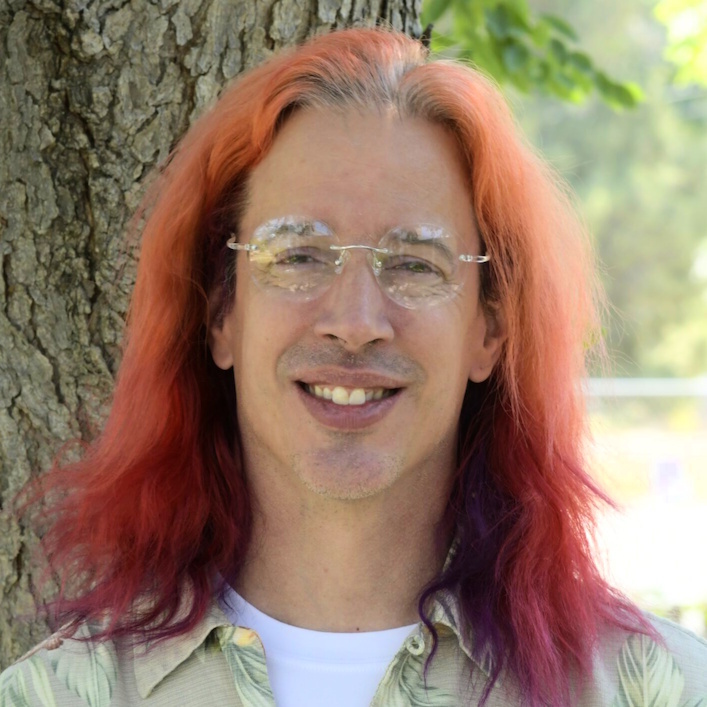


Greg: There's three pieces to JC in my interpretation of the process. The first is the summary. Everyone that was involved, everyone who witnessed anything, has the opportunity to just add and contribute to the summary of what happened.
Once we have that, then we move forward to: did this break any of our rules? And if not, should it have? Is this something that we don't want happening and we want to have a specific rule against? A perfect example: One of our students who was five years old saw a kid eating a snack that looked really interesting, and he wanted to try it. And he said, hey, give me some of that. And the student said, oh no, this is mine. You can't have it. And he was upset that that student wouldn't share with him. So he wrote up a case and said, I wanted to try a snack and this student wouldn't share it. And so we had a case. It wasn't just like, no, no, that's not how the world works, that's his. So the students went through that whole process of deciding, should we be compelled to share? Should we bring enough to share when we have something that's unique? What are the right ways to handle this dispute?
In the end, I think the student who didn't get the snack was happy to have been taken seriously when he said that's not fair, because ultimately, what we're looking for is a sense of justice and a sense that everyone has been heard and has been understood. And whether or not we can come up with the perfect way of encoding that into a law or a rule or a policy isn't as important to us today.
Once someone says, yes, I've broken the rule, then it's a question, well, what are we going to do to restore the sense of balance? In a lot of cases, our resolution may be as simple as time served discussing it in JC. Or it may be something simple. We had one case where a student just lost it one day and he started yelling at this poor little five-year-old girl. And so the resolution for that was every time you see this person, you've got to cheer them up. Say something nice to them for the next couple of days. Just like, you're the best. Anything. So we're typically looking for a resolution that will undo whatever damage was done in the relationship between two people or between a person and a school.
Christen: So when we started, we started with a template similar to Sudbury Valley School. So we had the judicial committee, the JC, and we had a rotation of jury members. And we had the rhetoric of "guilty" or "not guilty". And then we decided as a community that we wanted to evolve that to be a little less harsh feeling, especially for our younger voting members (that's what we call our students and staff). So it went from being "guilty" or "not guilty" to "I accept responsibility for what I did". And we started to call them consequences instead of sentences, and then it evolved to resolutions.
Je'anna: So when we were first looking at Sudbury Valley School and looking at how things were done there, we saw that they had a judicial committee, which operated a lot like a court of law. At that time in South Africa, we didn't have a very good experience with our mainstream legal system. It's plagued by a lot of corruption and it's often used politically. Whereas we had really great experience with the Truth and Reconciliation Committee in South Africa, which was more about restorative justice. So I had a conversation with Danny Greenberg at Sudbury Valley School, and he said that it was up to each space to create something that fit with their own circumstances, their own realities. That was part of the point. The judicial committee had been modeled on the New England town meeting, which was where Sudbury Valley was located.
So we set out trying to create our own system, and we came to call it Access Committee. In Sudbury tradition, there's something called certifications. I'll use an extreme example: At one point, Riverstone was donated a chainsaw. You need to make very, very sure that anyone who's going to switch that chainsaw on knows exactly what they're doing and is going to be capable and responsible with it. So just as one might have withdrawn his certification for the chainsaw because he maybe would have misused it and then we would have had to review his certification, so in the same way, if a student was not able to be peaceful with other students or there would be some kind of serious conflict arising, then we saw that also as a matter of access.
We had, for example, one little boy whose cousins had taught him about mooning. And he thought it was great fun to moon people. So the Access Committee, being a restorative justice-oriented committee (I think at the time it was two students and two staff on a rotational basis), they sat down with this little guy to problem-solve with him. And two solutions were collaboratively created. Firstly, one of the families had a leather workshop where they made various things including belts. They donated a belt for him to have on his shorts that would slow down his impulse control, because he'd have to undo his belt and be able to think about whether he wanted to do that or not.
The second thing was that he was put under staff supervision for a day. So his access to the little girls that he had been mooning was withdrawn for that day. He had to shadow staff around, which was really great, actually, because we got to have a chat and find out where it was coming from and be able to talk through it. And he also got to do quite a lot of things because, of course, we didn't follow him around, because Sudbury is about responsibility and real life. So he had to follow us around. And we sort of handed him off from staff to staff and all had a turn to connect with him.
There was one girl at one point who was forgetting to turn off the stove. And so her certification to use the kitchen on her own had to be reviewed. The solution that she suggested that worked very well, working in a problem-solving way, was that she would put on an apron as soon as she began to work in the kitchen, and she would not take that apron off until after she'd switched off the stove. And so if she found herself walking down the hall wearing an apron, she would run back and turn off the stove.
Christen: After our third year, we really started evolving it. We stepped back and said, what do we really want? And students said, we really don't love being on a jury. It feels like a hostage situation. And so it was a really wonderful community process to talk about how we want to resolve conflict at school. So now, we call it the Restorative Justice Committee, the idea being that we really want our students and staff to be able to write "concerns" as we call them. So there's a concern form, and they write their name, and I'm concerned about this voting member, and this is what happened. And then also there's check boxes for how they felt about it: I felt disrespected, or concerned, or I had neutral feelings about it. There's a whole bunch of choices of what they can say.
It's a lot more of a discussion. So it happens at this round table. The idea is, here's the concern. Let's talk about it. How did you feel? How did you feel? What was going on? And the questions have evolved from just "do you take responsibility" to "how can the community support you in making different decisions?" Or, "what do you feel like you need to feel like this is resolved?" Or, "what do you feel like you need to do something different next time?"
Greg: It's very interesting when someone complains that their resolution for a particular infraction of the rules is such a nothing burger that it's not going to deter them from doing it again. Because when they do it the second and the third and the fourth time, and that resolution starts to have teeth... One of the more common things in our school to happen is, if you don't pay attention to JC and to its resolutions, if you don't take them seriously, then you can get suspended, and basically be told, the community doesn't want you here for a day or two because you're not taking their concerns seriously. And all of a sudden it's like, whoa, how can you suspend someone for not doing their dishes? But they're not being suspended for not doingtheir dishes. They're being suspended for not treating the community with respect when the community says, we really need you to pay more attention here.
Christen: So sometimes the resolution will be: it seems like you two probably just need to have some mediation. So we have a mediation team of staff, and then sometimes older students will ask to be trained. Sometimes resolutions will be: you keep leaving all your lunch stuff everywhere in the kitchen, so how about you just can eat outside (which in Miami you can do mostly year round, and if it's raining, of course, you can still eat inside). So let's try to find something to help remind you that this is important. Or, maybe you need a support person, to check in with them when you're done eating so you have some more accountability for cleaning up. So it feels a lot more like collaborative, cooperative problem solving for the community.
And if something is really recurring and is just not resolving (it depends on the age of the voting member, it depends on what it is), but if it's something that keeps coming back to RJC, the facilitator might say, I think this is most appropriately brought to School Meeting. So they'll refer it to our weekly School Meeting. We just want more input from the rest of the community about what to do. It depends on what it is, but the School Meeting will say, in the past this has been helpful. Or maybe this sounds like we need to get family involved and we need to have a family meeting. And in the family meeting we try to make an action plan that we bring back to School Meeting. And the person gets to say, "here's what I said I would do."
And if someone gets asked to have a reflection period in School Meeting, other students will typically say, this is a really special place that we're part of. And if you don't want to be here, it's OK. We still love you and we'll wish you well. But if you do want to be here, here are the basic agreements that we make, and you're breaking those agreements. And so this is a conflict. So we want you to take a day or two, a weekend, sometimes a week, and really reflect, what do I want more? Do I want to be in this community? If so, I can't be doing these things that are against the agreements we decided on together.
We had a student who was making jokes that other students said, I think those are kind of sexist. They don't make me feel comfortable. I get it, they're just memes, but I don't like that. We don't like that. And we've now brought it to School Meeting and we're going to ask you to really reflect on that. And then they came back after the reflection period to School Meeting and said, I really did reflecting. And I don't want to just not make those jokes at school, I don't want to make those jokes at all, actually. I don't want to be that kind of person. To me, that was beautiful. It's a testament to why we do what we do here. It's not just punishment, it's not just, "That's bad, you shouldn't say those things." It's really getting to the heart of, why does that make other people feel uncomfortable? Is this how you want to show up in this community and in your life?
Je'anna: Over time, we also realized that we also needed to have a simple conflict resolution process. Because a lot of the things that arose weren't really breakings of agreements or affecting the loss of certification. Most conflict is much simpler: it's mostly just a disagreement or a clash of personalities. For that we used a very simple kind of active listening, what I call horizontal communication process, where it's basically about trying to find out, what's everybody feeling? What happened? What does everybody need? How could we solve this together? What do we need in order to be able to be at peace with each other again?
And it was quite lovely to see that this was fairly informal, and over time many young people picked up the process and started offering themselves as conflict resolvers. Basically people could choose: Do you want to do a conflict resolution? Do you want to just solve it yourselves? Or is this serious enough that you want to call an Access Committee if you really feel that you've been wronged or harmed?
Greg: Like the old saying goes, democracy is the worst system except for everything else we've tried. And I feel the same way about JC. What's important to me is that there's a process that is not easily manipulated by the adults or the taller kids in the room. My worry if you get too far down the path of mediation or whatnot, is it's so easy to just try and find agreement and to try and smooth things over, rather than actually digging into the details.
Je'anna: And then eventually, we ended up also creating a JC, a judicial committee, which acted more like a court. It took a couple of years for us to find the need for it, and we didn't use it very often, but it did turn out for us that there definitely was a place for that too, in two ways. First, some people just really don't want to sit through a theory, empathy heavy discussion. They just want to get it over with. And they're perfectly happy to have a punishment or a consequence if it can just put things right so they can move on. Second, there were occasions every now and again where people just wouldn't cooperate or just would not be honest, wouldn't come to the table. And under those circumstances, you can't really come to a mutually win-win solution through communication.
So we came to the conclusion that we did have to have something that could run without that person's participation if necessary, that could simply hand down a solution. That was used a couple of times. People didn't like volunteering for the JC very much because it felt as if they were stepping into more of a hardcore space, and it felt like the consequences might be a little less predictable. It would be something that would be decided by the people on the committee, with maybe less communication than there would be in the Access Committee.
But I think people in general don't feel much like resolving conflict. It's like they want to get on with their lives. So I think the most popular thing was kind of informal solve-it-yourself so that you don't have to have a formal thing to sit down with. So we've found over time we did less of all of the above. It became a sort of a cascade, if you like: (1) Just solve it yourself informally; (2) Sit down and get anyone who wants to to help you mediate and resolve your conflict; (3) Call an Access Committee (we also had two levels of Access Committee: you could have one staff and one student if it wasn't very serious, two of each if it was something substantial); (4) And if that wasn't working, it could go to the JC; (5) And if that wasn't working, it could go to Meeting. Meeting, of course, in a Sudbury school is the ultimate authority because that's where all of the real decisions are made. So anything very serious has to go to Meeting.
Christen: The conflicts and the conflict resolution and the dialogue and the discussion, I've often heard our JC being the heart of a Sudbury school. And I think that's part of why it's so powerful: It isn't just the top-down, the adults saying "that's not good, don't do that again." Or delivering a lecture, which sounds like Charlie Brown's teacher. It's having peers to weigh in and say, oftentimes with great compassion, that's hard, I know. Or, I used to do that. Or, we just can't have that here. So how can we support you in doing something different? Having that opportunity for young people to dialogue and then to have those choices of what I want to do. I think this is part of what makes Sudbury such a gem.
Stay tuned!
Subscribe to receive notifications about new articles in our blog.
By clicking the button you agree to our Privacy Policy
Up next: